
Identity is the primary attack surface
Cyber Security Trends 2027
HuFiCon Management Memo:
Journey with the CISO
A mountain climb to cyber security resilience. Find out how to get to the summit of cyber security resilience in Inge van der Beijl's management memo, from her presentation at the Human Firewall Conference (HuFiCon) on the 14.11.2024.
The climb will take you from the base camp of foundational security to the high-camp of a security conscious culture, all the way to the summit consisting of strategic security integration.

Inge van der Beijl
Director Innovation
Why are identity-based attacks increasing?
Identity-based attacks are increasing because compromising a trusted identity can give attackers legitimate-looking access across multiple cloud and SaaS environments. Instead of targeting multifactor authentication (MFA) directly, attackers are abusing authentication workflows or stealing sessions and tokens after authentication. Single sign-on, permissions, and machine identities can then extend that trusted access across interconnected systems.
Key takeaway
Attackers exploit trusted authentication, sessions and permissions to turn a single compromised identity into legitimate-looking access across the organisation, while AI enables them to quickly analyse communications, impersonate victims and send highly personalised phishing messages at scale.
Learn more about the latest trends in identity-based attacks:
- What identity-based attacks did Northwave observe in 2026?
- Phishing remained a primary route to identity compromise
- Device code phishing emerged as a significant new technique
- Attackers are targeting trusted sessions
- Social engineering expanded beyond email
- Is Business Email Compromise still a threat to businesses?
- Expert Insight: Inge van der Beijl, General Manager Innovation, Head of Expertise Cyber Safe Behaviour
- What happens after one identity is compromised?
- Is MFA still enough?
- Why this matters for organisations
- What can organisations expect in 2027?
- What should organisations do in 2027?
What Identity-based attacks did Northwave Observe in 2026?
Northwave's incident response and SOC investigations throughout 2026 showed attackers targeting authentication flows, sessions, and trusted digital identities rather than relying solely on traditional credential theft.
Phishing remained a primary route to identity compromise
Phishing remained the most prevalent initial access vector observed by Northwave's SOC in 2026, ranging from basic delivery attempts to full account compromise.
Many attacks still relied on familiar techniques, but threat actors used generative AI to make lures and infrastructure more convincing. Northwave observed fake file-sharing services that redirected victims through multiple stages before presenting realistic Microsoft login pages. Advanced phishing kits dynamically adapted their appearance to the victim's email domain.
Attackers also abused legitimate infrastructure such as SharePoint and Microsoft Forms to distribute phishing material through services employees already recognised and trusted. This made malicious activity more difficult for both users and technical controls to distinguish from legitimate business activity.
A notable phishing case used a fake Microsoft Teams meeting invitation to lure a user to a fraudulent sign-in page. Rather than impersonating a document-sharing service, the attackers exploited the familiarity of virtual meetings to harvest credentials. Northwave security experts encountered this approach more frequently in the second half of 2026, suggesting that attackers are increasingly adapting phishing to resemble routine workplace interactions.
Generative AI is accelerating this trend by enabling threat actors to create highly targeted phishing campaigns more efficiently and at greater scale. For example, TheMailer is a popular AI-powered phishing platform that hit the market in March 2026. According to a report by Varonis Threat Labs, the platform runs on AI models like Claude and ChatGPT and uses generative AI to personalise messages and tailor them to different email providers until the lures bypass spam filters.
Device code phishing emerged as a significant new technique
One of the clearest developments in 2026 was the rapid rise of device code phishing.
Device code authentication is a legitimate process designed for devices with limited input capabilities. Attackers abuse this workflow by persuading victims to enter a code into a genuine Microsoft sign-in page and complete MFA. The victim believes they are authenticating normally but are actually authorising an attacker-controlled session.
Northwave's SOC saw device code phishing move quickly from an emerging technique to phishing kits, making the method accessible to a much broader range of threat actors.
External observations reflected the same development. In September 2026, Microsoft reported that the EvilTokens phishing-as-a-service platform had compromised more than 12,000 inboxes across over 10,000 organisations worldwide. EvilTokens abused device code authentication, stole tokens, and automated multiple stages of business email compromise campaigns.
The development illustrates an important shift: attackers do not necessarily need to steal a password or defeat MFA when they can persuade a victim to authorise access through a legitimate authentication process.
Attackers are targeting trusted sessions
Session theft was another recurring feature of identity compromise in 2026.
Northwave observed Adversary-in-the-Middle and Browser-in-the-Middle phishing techniques that intercepted authenticated sessions after victims had successfully completed MFA. Attackers could then reuse those sessions to access services such as Microsoft 365 without another authentication challenge.
In some campaigns, threat actors also used proxies geographically close to the victim, making subsequent sign-ins appear more consistent with legitimate user activity. In this way, MFA itself has not necessarily failed. The attacker has exploited the trust created after successful authentication.
Stolen sessions can also persist beyond a password reset. Therefore, organisations must revoke active sessions and tokens and investigate whether attackers have established additional persistence.
Social engineering expanded beyond email
Attackers are also combining different communications channels and legitimate business platforms.
One pattern observed by Northwave involved email bombing. This is when victims receive a large volume of unwanted messages before being contacted through Microsoft Teams by someone impersonating IT support. The attacker then attempts to persuade the victim to install remote-access software or execute commands.
Similar campaigns used ClickFix techniques, fake CAPTCHA prompts, and software-update messages to persuade users to execute commands themselves. These attacks frequently delivered infostealers or remote-access malware capable of harvesting credentials, session tokens, and other identity information.
While the methods may differ, the common thread is the attacker's ability to exploit trusted communication channels and normal user behaviour to gain authenticated access.
Is Business Email Compromise still a threat to businesses?
Northwave’s Global Threat Landscape Report 2026 identifies Business Email Compromise (BEC) as a key threat to European organisations, particularly across the business services, legal services, and manufacturing sectors. BEC accounts for just under half of Northwave's incident response cases, surpassing ransomware and cyber extortion. It remains one of the most reliable attack paths as threat actors continue to be successful in exploiting identity, trust, and timing. Even with widespread MFA adoption, these attacks remain effective and repeatable.
Northwave’s cyber security experts strongly advise organisations to view business email compromise as more than an email-fraud problem. BEC has evolved and is now just one potential outcome of a broader identity compromise. Attackers harvest credentials, sessions, and tokens through phishing-as-a-service, infostealers, and MFA bypass techniques, creating reusable access that can enable fraud, extortion, or secondary cyberattacks.
Vendor email compromise (VEC) is now fully automated. With this common social engineering technique, attackers hijack a vendor’s mailbox and quickly send phishing emails from legitimate accounts. Because the emails come from a genuinely trusted sender, these attacks bypass many trust checks and quickly spread through the supply chain. We expect this technique to become more sophisticated as attackers use AI to scan the inbox for personal details and real business context that helps them convincingly impersonate the victim.
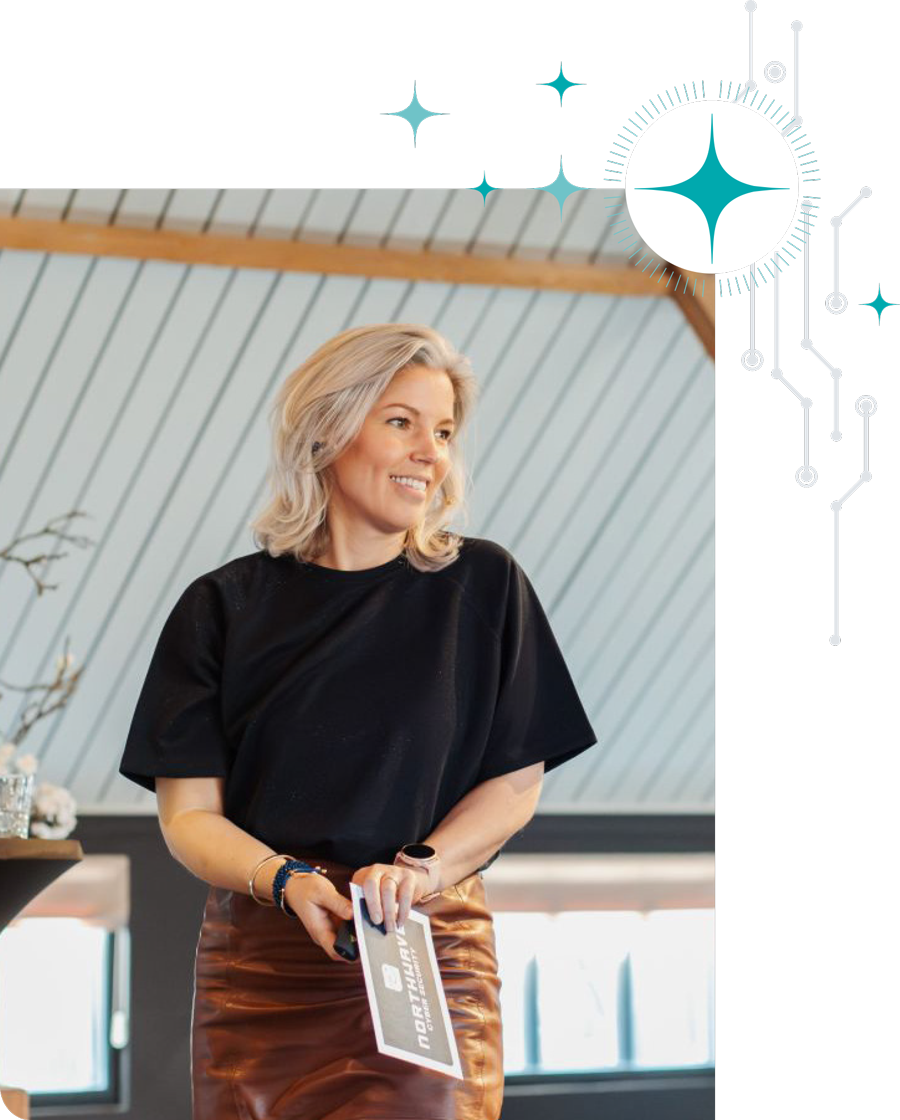
Expert Insight: Design For Human Resilience
By: Inge van der Beijl, General Manager Innovation, Head of Expertise Cyber Safe Behaviour
BEC is ultimately a decision problem, not just an identity problem. Attackers manipulate urgency, authority and trust at the exact moment a decision must be made.
Now, threat actors can use AI to create deepfakes that are indistinguishable from reality. This means in 2027, organisations can no longer rely on people to tell what is real. Instead, design for human resilience. Use technology to verify what is real and ensure that human decisions are structured, slowed down, and verified in the moments that matter.

What happens after one identity is compromised?
The impact of identity compromise extends far beyond access to a single mailbox. Once attackers control an authenticated session or account, they can use the victim's existing permissions and relationships to:
- monitor business conversations and identify payment opportunities
- manipulate invoices or payment instructions • send phishing messages from a genuinely trusted account
- access and exfiltrate sensitive files
- enumerate cloud applications and other systems available to the user
- establish persistence through forwarding rules, OAuth permissions or additional authentication methods
- use the compromised identity as a starting point for further lateral movement
By exploiting trusted relationships, attackers can significantly widen the blast radius of the identity compromise. Messages sent from a legitimate employee account carry the organisation's identity and established relationships, making subsequent phishing attacks against customers, suppliers, and colleagues considerably more convincing.
Is MFA still enough?
Multifactor authentication (MFA) remains an essential baseline control, but conventional MFA alone cannot protect against every modern identity attack. As more organisations have adopted MFA, attackers have adapted by targeting authentication workflows and the trusted access created after successful authentication.
Common techniques include:
- Adversary-in-the-Middle phishing The victim successfully completes MFA, but the attacker captures and reuses the authenticated session.
- Session theft An existing authenticated session is stolen, removing the need to authenticate again.
- OAuth consent abuse A user is persuaded to grant a malicious application access to organisational data, creating delegated permissions that may remain active independently of the user's password.
- Device code phishing The victim completes a legitimate authentication process but unknowingly authorises an attacker-controlled session.
- Rogue MFA registration An attacker gains the ability to register their own device or authentication method so that it becomes trusted by the organisation.
- In addition to enabling MFA, organisations need to understand which authentication flows are available, what trusted access they create and how quickly that trust can be revoked when compromise occurs.
Why this matters for organisations
One compromised identity can expose multiple systems, cloud services, and business processes at once.
Identity-based attacks are particularly difficult to detect because attackers can operate through legitimate accounts, sessions, and cloud services. Their activity may therefore resemble normal user behaviour rather than a traditional intrusion.
This creates three major challenges:
- Detection becomes harder. Valid sessions, familiar cloud services and trusted user accounts can reduce the signals that traditionally indicate compromise.
- The impact can spread quickly. Single sign-on, delegated permissions and interconnected SaaS applications mean one compromised identity may provide routes into multiple systems and datasets.
- The consequences extend beyond IT. Identity compromise can lead to fraud, data theft, supplier abuse, phishing against customers, reputational damage and further cyberattacks. The risk therefore extends to finance, procurement, legal, operations and leadership as well as security teams.
- Speed compounds all three challenges. In 2026, Northwave's SOC observed attackers beginning post-compromise activity within minutes, using AI-powered automation to scan mailboxes, establish persistence and prepare compromised accounts for further abuse. The timeline for organisations to identify and contain an identity compromise is becoming much shorter.
What can organisations expect in 2027?
Identity-based attacks are likely to become more automated, scalable, and difficult to distinguish from legitimate activity.
Four developments are particularly important:
-
Attackers target trusted access rather than passwords. Sessions, authentication tokens, and delegated permissions provide attackers with ways to operate after successful authentication. Monitoring and revoking trusted access will become as important as protecting credentials.
-
Attackers are looking for legitimate authentication workflows to abuse. Device code phishing demonstrated how an authentication mechanism designed for legitimate users could become an effective phishing technique. In 2027, organisations can expect attackers to abuse other under-monitored authentication and authorisation flows as threat actors seek to replicate their successful techniques.
-
Identity attacks will spread further across SaaS environments. Compromised user accounts, OAuth applications, and machine identities can provide access across interconnected cloud services, increasing the potential blast radius of a single compromise.
-
Post-compromise activity will become faster and more automated with AI. Northwave has already observed attackers establishing persistence and preparing accounts for further abuse within minutes. Greater automation will further compress the time between initial compromise and business impact.
What should organisations do in 2027?
Trust in users, authentication flows, and human and machine identities can no longer be implicit. Anything trusted by default should be continuously verified, monitored, and constrained.
-
Reduce the authentication attack surface. Identify which authentication methods and workflows are enabled across the organisation. Disable those that are unnecessary and tightly restrict those that remain, including device code authentication and user-controlled OAuth consent where appropriate.
-
Strengthen the identity baseline. Use phishing-resistant MFA and conditional access, particularly for privileged and high-risk accounts. Restrict authentication from unmanaged devices and apply risk-based access policies.
-
Monitor sessions, tokens and delegated permissions. Detection should extend beyond login events. Monitor for unusual session activity, OAuth grants, new authentication methods and other changes that could create persistent access. Ensure sessions and tokens can be revoked quickly during an incident.
-
Limit post-compromise persistence. Restrict users from creating external forwarding rules or granting third-party applications unnecessary access. Alert on suspicious mailbox rules, permissions and changes to authentication settings.
-
Protect high-risk business decisions. Identity security should be supported by business-process controls. Use out-of-band verification and four-eyes approval for sensitive payments, bank-detail changes and other high-impact actions.
-
Prepare employees for multi-channel social engineering. Training should cover email, Teams, telephone, messaging platforms and fake IT-support scenarios rather than focusing on traditional phishing alone.
We are here for you
Need help with your cyber security or wondering how secure your business really is?
Get in touch and we will help you find the best solution.